Airline industry watchers are reeling from a rare admission by United Airlines CEO Scott Kirby: he personally approached American Airlines about a potential merger. In a candid moment during a private industry event, Kirby confirmed he initiated discussions with American’s leadership, marking one of the most direct acknowledgments of consolidation ambitions in modern aviation history.
This isn’t corporate gossip—it’s a seismic statement from the top of a major U.S. carrier. And while no deal is imminent, the mere fact that United’s CEO floated the idea reveals deeper pressures reshaping the airline sector: rising costs, shrinking profitability outside premium cabins, and an unrelenting operational grind.
Why United’s CEO Made the Move
Scott Kirby didn’t act on impulse. His outreach to American Airlines stems from structural challenges that have plagued legacy carriers for years. Despite record-breaking travel demand post-pandemic, profitability remains fragile. Labor costs, fuel volatility, and fleet modernization expenses are squeezing margins—especially on transcontinental and mid-tier domestic routes where competition is fiercest.
Consider this: United, Delta, and American collectively spend over $70 billion annually on operations. Yet, domestic yields (revenue per mile flown) have barely recovered to pre-pandemic levels when adjusted for inflation. International markets remain stronger, but they’re not enough to offset domestic drag.
Kirby’s logic is straightforward: fewer major carriers could mean: - Reduced price competition - Better route rationalization - Cost synergies through overlapping hubs and systems - Stronger leverage with suppliers and airports
It’s the same rationale behind past consolidations—like Delta-Northwest in 2008 and United-Continental in 2010. But today’s regulatory climate is far less forgiving.
Regulatory Hurdles Are Immense
Even if both United and American were eager, the Department of Justice (DOJ) would almost certainly block a merger. The U.S. airline market is already an oligopoly, with the "Big Four"—American, Delta, United, and Southwest—controlling over 80% of domestic capacity.
A United-American merger would: - Eliminate head-to-head competition on hundreds of routes - Combine two of the three largest carriers by fleet size and revenue - Create a single entity with dominance at major hubs like Chicago (ORD), Dallas (DFW), and Washington (IAD/DCA)
The DOJ’s Antitrust Division, under current leadership, has shown zero tolerance for deals that reduce competition. Recent interventions—halting JetBlue’s proposed partnership with Spirit, challenging Google’s ad tech dominance—signal aggressive enforcement.
A merger of this scale would face not just DOJ scrutiny, but also opposition from Congress, consumer groups, and regional airports that rely on competitive pricing.
“We’re not blind to the regulatory reality,” Kirby reportedly told executives. “But it’s worth asking the question. The status quo isn’t sustainable.”
What a United-American Merger Would Mean for Travelers
Consumers rarely benefit from reduced competition—especially in concentrated markets. Here’s what travelers could expect if such a merger ever materialized:

Higher Fares on Key Routes Markets where United and American currently compete—like New York (JFK/LGA) to Los Angeles (LAX), or Chicago (ORD) to Miami (MIA)—would likely see fare increases. A 2023 study by the American Economic Association found that airline mergers lead to average fare hikes of 5–10% on overlapping routes.
Fewer Choices, More Schedule Rigidity With fewer carriers, passengers lose leverage. Less competition means less incentive to offer flexible schedules, generous change policies, or last-minute discounted fares. Loyalty programs might consolidate—but at the cost of devalued miles and stricter redemption rules.
Hub Consolidation and Service Cuts Both airlines operate massive hubs. A combined carrier would likely downsize overlapping operations. Cities like Newark (EWR) or Phoenix (PHX) could see reduced service if deemed redundant. Regional carriers and smaller airports would bear the brunt.
Improved Long-Haul Network? On the positive side, a merged United-American could build a more seamless global network. American’s strength in Latin America and United’s dominance in Asia-Pacific could integrate into one powerful international product. Think nonstop flights from Dallas to Shanghai or Newark to São Paulo with unified scheduling and through-ticketing.
But that benefit is speculative. Cost-cutting often outweighs network enhancement in post-merger integration.
Why American Said No—And Was Right To
American Airlines’ leadership reportedly rebuffed Kirby’s overture quickly. That makes strategic sense.
American is still recovering from bankruptcy in 2022 and restructuring its cost base. CEO Robert Isom has focused on operational reliability and rebuilding trust with employees and customers—not on disruptive integration with a rival.
Moreover, American’s partnership with JetBlue—though scaled back—still offers some of the benefits of consolidation without the regulatory risk. The Northeast Alliance (NEA) gives American access to premium traffic from Boston, New York, and Washington without owning JetBlue.
Merging with United would have forced painful decisions: - Which brand survives? - How to merge union contracts across pilot, flight attendant, and ground staff groups? - What to do with overlapping fleets and maintenance facilities?
The human cost alone—thousands of potential job cuts—makes such a deal politically toxic.
Precedents and Past Failures
The airline industry has a long history of failed merger talks. In 2012, rumors swirled about a United-American combination until both sides denied interest. More recently, American and Delta were rumored to have explored talks during the pandemic, but nothing materialized.
What kills these deals isn’t lack of strategic logic—it’s execution risk and regulatory certainty. Even the United-Continental merger, completed over a decade ago, took years to fully integrate and never delivered all promised synergies.
Delta’s acquisition of Northwest succeeded partly because it faced less overlap and a more lenient DOJ. Today, that window is closed.
The Real Goal: Industry Consolidation, Not Just One Deal
Kirby’s move may have been less about securing a merger and more about shifting the narrative. By going public (even indirectly) with the idea, he’s signaling to investors, regulators, and competitors that the current four-carrier model is inefficient.
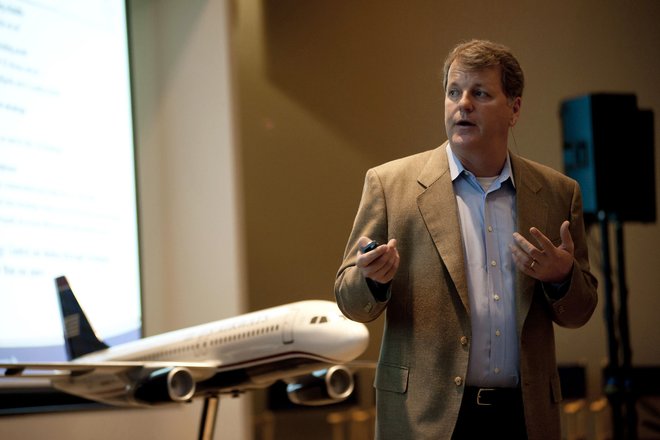
His message: the industry needs to shrink. Whether through partnerships, joint ventures, or selective asset swaps, consolidation is inevitable. The alternative—stagnant profits and relentless cost pressure—risks long-term instability.
This isn’t just United’s problem. Delta has also hinted at the need for “rationalization.” Southwest, though privately opposed to mergers, faces its own growth limits without major hubs.
The FAA and DOJ may resist, but market forces are relentless.
What’s Next for United and American
Don’t expect merger talks to resume. But expect both airlines to: - Expand international joint ventures (e.g., United with Lufthansa, American with Qatar Airways) - Optimize overlapping domestic routes through capacity discipline - Invest in premium cabins and loyalty programs to boost revenue - Push for slot swaps or airport access deals to improve network efficiency
United may also accelerate its focus on international growth—especially in Africa and India, where it’s expanding service—to reduce reliance on crowded domestic markets.
American will continue refining its “Premium Transcontinental” product and rebuilding its Dallas and Charlotte hubs as global connectors.
A Strategic Signal, Not a Surprise Bid
Scott Kirby’s admission wasn’t a surprise merger announcement. It was a calculated revelation—one designed to spotlight the unsustainable pressures facing legacy carriers.
He didn’t expect the deal to happen. But by confirming he made the call, he forced a conversation the industry has been avoiding: how many major airlines can the U.S. market realistically support?
The answer may not be two. But it’s certainly not four—not if carriers want to invest in better planes, pay competitive wages, and deliver reliable service without constant cost-cutting.
For travelers, the takeaway is clear: competition is fragile. When CEOs start talking mergers, fares are watching.
The best way to protect consumer choice is through strong antitrust enforcement—and public awareness. Because once competition disappears, it doesn’t come back.
Frequently Asked Questions
Did United and American Airlines merge? No. United CEO Scott Kirby confirmed he approached American about a merger, but no deal was made. American rejected the idea.
Why would United want to merge with American Airlines? To reduce competition, cut costs, and improve profitability by consolidating overlapping routes and operations.
Would a United-American merger be allowed? Almost certainly not. The Department of Justice would likely block it due to antitrust concerns and reduced competition.
How would a merger affect flight prices? Fares would likely increase, especially on routes where United and American currently compete directly.
What happens to frequent flyer miles in a merger? Loyalty programs would likely be combined, but miles could be devalued, and redemption rules may become more restrictive.
Are airline mergers good for customers? Typically not. Mergers reduce competition, leading to fewer choices, less innovation, and higher prices over time.
Is another airline merger likely in the U.S.? Unlikely among the Big Four. Regulators are hostile to consolidation. Smaller deals or international partnerships are more plausible.
FAQ
What should you look for in United CEO Confirms Merger Talks with American Airlines? Focus on relevance, practical value, and how well the solution matches real user intent.
Is United CEO Confirms Merger Talks with American Airlines suitable for beginners? That depends on the workflow, but a clear step-by-step approach usually makes it easier to start.
How do you compare options around United CEO Confirms Merger Talks with American Airlines? Compare features, trust signals, limitations, pricing, and ease of implementation.
What mistakes should you avoid? Avoid generic choices, weak validation, and decisions based only on marketing claims.
What is the next best step? Shortlist the most relevant options, validate them quickly, and refine from real-world results.