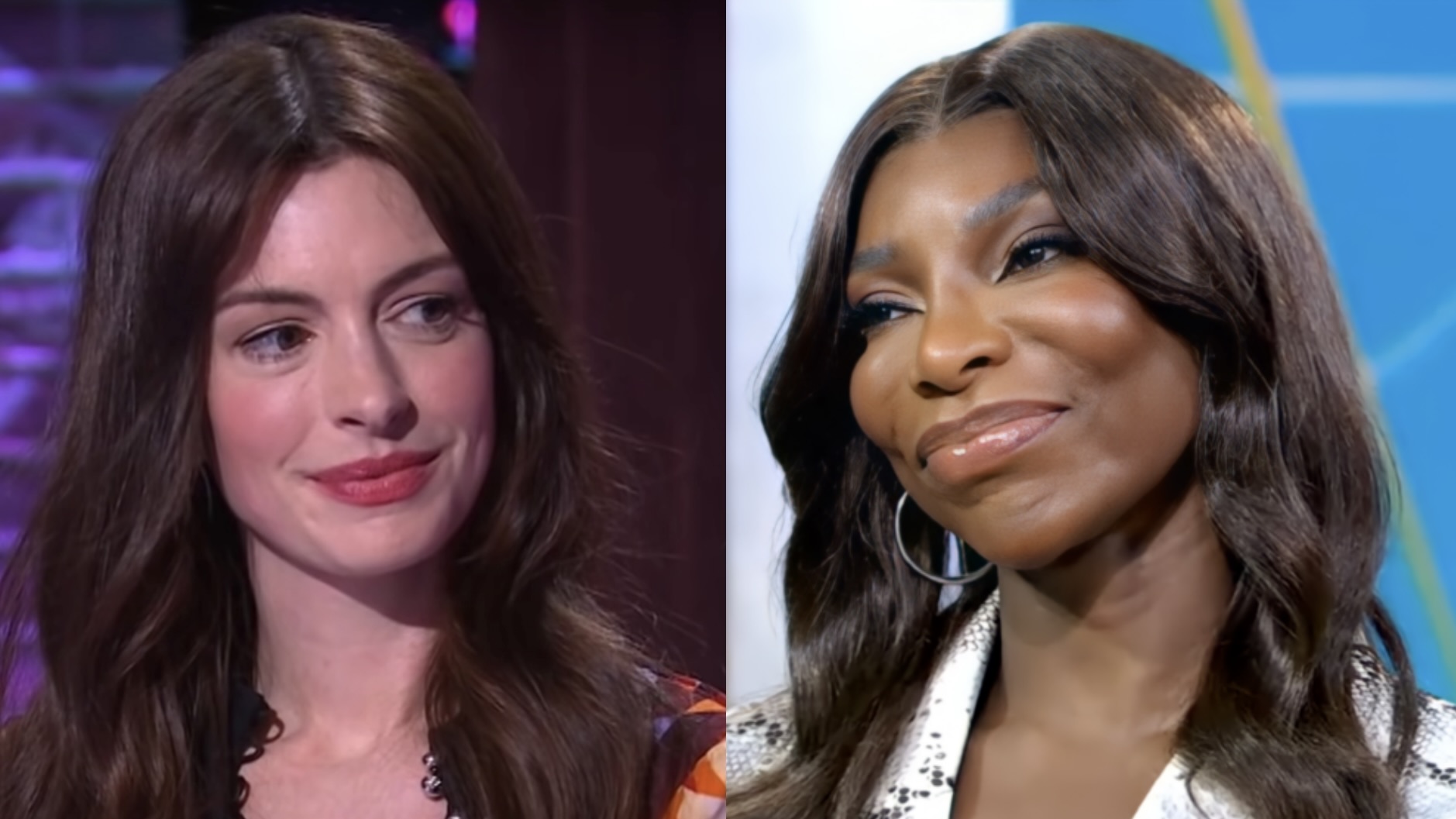
It wasn’t a viral TikTok stunt. It wasn’t staged for the cameras. When Anne Hathaway subtly turned her sweeping navy gown into a human curtain to shield Michaela Coel from a potential wardrobe malfunction, she redefined what it means to “have someone’s back” on the red carpet.
In an era where celebrity interactions are often curated, competitive, or coldly transactional, this unscripted act stood out—not just for its ingenuity, but for its instinctive empathy. Hathaway didn’t hesitate. She didn’t signal for help. She simply stepped in, used the fabric of her own dress like a privacy screen, and restored dignity in real time.
This moment—quiet yet monumental—deserves more than a fleeting social media post. It’s a case study in grace under pressure, female solidarity, and the subtle choreography of kindness in the spotlight.
Let’s break down why this single gesture resonated so deeply.
The Anatomy of the Moment
The scene unfolded at a high-profile premiere, where red carpet stakes are astronomical. Cameras flash. Reporters shout. Every movement is dissected.
Michaela Coel, dressed in a striking one-shoulder gown with delicate fastenings, was mid-interview when a strap loosened. Not a full wardrobe failure—just a hair’s breadth from one. The kind of slip that, unchecked, could spiral into tabloid fodder, unsolicited memes, and invasive close-ups.
That’s when Anne Hathaway, standing nearby, noticed.
Instead of looking away or pretending not to see, she pivoted. With one smooth motion, she angled her wide, floor-length train toward Coel, creating a flowing barrier between Coel and the nearest cameras. She smiled, continued her conversation, and made it look effortless.
No drama. No grandstanding. Just protection, delivered with elegance.
Why This Wasn’t Just “Being Polite”
Most celebrities might have offered a sympathetic glance or a whispered warning. Hathaway did something bolder: she used her own presence—and her own fashion statement—as a tool of intervention.
Her dress, designed by Oscar de la Renta, featured a voluminous skirt with enough drape to function as a literal curtain. But design only gets you halfway. The real magic was in the decision-making:
- Situational Awareness: She was alert to what was happening outside her own frame.
- Speed of Response: No delay, no hesitation—she acted in real time.
- Discretion: She didn’t point, gasp, or draw attention. The fix was invisible to most viewers.
- Selflessness: She compromised her own photo opportunities to preserve Coel’s moment.
It’s rare to see power used so softly. And that’s what made it powerful.
The Red Carpet: A Minefield of Exposure
The modern red carpet isn’t just about fashion—it’s a high-wire act. Celebrities walk a razor-thin line between looking daring and facing humiliation. One misbuttoned corset, one faulty clasp, one gust of wind, and the narrative shifts from “best dressed” to “wardrobe malfunction.”
And the consequences? Asymmetrical.
Women are disproportionately scrutinized. A dress that slips is rarely seen as a product failure or environmental factor (wind, humidity, movement). Instead, it becomes a moral failing: “She shouldn’t have worn that.” “She was asking for attention.”
Remember Jennifer Lawrence tripping at the Oscars? The internet turned it into a meme festival. Her grace under embarrassment was overshadowed by endless GIFs.
In that context, Hathaway’s act wasn’t just kind—it was corrective. She interrupted the cycle of potential shaming before it could begin.
Real-World Consequences of Wardrobe Fails
Let’s be clear: wardrobe malfunctions aren’t just embarrassing. They can:
- Damage endorsement deals
- Trigger online harassment
- Be weaponized in cancel culture discourse
- Influence casting decisions behind closed doors
A single moment of exposure—literal or perceived—can follow a woman for years.
Hathaway’s intervention wasn’t about fabric. It was about control. She gave Coel back her agency in a space designed to take it away.
Why This Moment Resonates Beyond Hollywood
You don’t have to follow fashion to feel the weight of this moment. Because at its core, it’s about what we all crave: to be seen, protected, and respected—especially when vulnerable.
Think about it in everyday terms:
- A coworker subtly covering for you when you spill coffee during a presentation
- A friend stepping in when someone makes an inappropriate comment
- A stranger offering their jacket when your shirt tears on public transit
These small acts of solidarity are the glue of human connection. Hathaway just performed one on a global stage.
And people noticed—not because it was loud, but because it was real.
The Social Media Reaction Was Instant
Within hours, clips of the moment spread across Twitter, Instagram, and TikTok. Not because they were promoted, but because they felt authentic.
Viewers called it:
- “The most elegant save in red carpet history.”
- “Quiet feminism in action.”
- “If you don’t respect Anne Hathaway after this, we can’t be friends.”
One user wrote: “She didn’t need to do that. No one would’ve blamed her for ignoring it. But she chose decency. That’s character.”
Another added: “Michaela Coel gets to walk away with her dignity intact. Anne Hathaway gave her that gift.”
The praise wasn’t just for the act—but for the way it was done. No performance. No self-congratulation. Just a sisterhood in motion.
The Bigger Picture: Female Solidarity in the Spotlight
Hollywood has long been accused of pitting women against each other—over roles, over ratings, over red carpet attention. But moments like this expose a different truth: many women in the industry actively support each other, often behind the scenes.
Hathaway and Coel aren’t close friends. They’re not co-stars. But in that second, Hathaway treated Coel like family.
It echoes other quiet acts of support:
- Lupita Nyong’o lending a shawl to an overheated Viola Davis at an event
- Florence Pugh publicly praising a fellow actress after a brutal tabloid takedown
- Tracee Ellis Ross stepping between a paparazzo and a distressed Naomi Campbell
These gestures don’t always make headlines. But when they do, they remind us that compassion isn’t rare—it’s just underreported.
What Can We Learn From This?
You don’t need a couture gown to make a difference. But you do need awareness, empathy, and the courage to act.
In your own life, consider:
- Who needs shielding right now? A colleague? A friend? A stranger?
- What “fabric” do you have to offer? Your voice? Your time? Your silence?
- Can you act without needing credit?
Hathaway’s power wasn’t just in her fame—it was in her willingness to use it quietly.
Why This Moment Is Culturally Significant
Let’s not underestimate what happened. This wasn’t just a “nice thing.” It was a reset.

In a world where women are often expected to compete, this was collaboration. Where vulnerability is punished, this was protection. Where image is everything, this was integrity.
It also challenges the myth that celebrities are disconnected from real human emotion. Here was a woman using her platform—her body, her dress, her presence—to say: You are safe here.
That’s leadership.
And it didn’t require a speech, a campaign, or a spotlight. Just a split-second decision to do the right thing.
Fashion as a Tool for Good
We often talk about fashion as vanity. But in this case, it became functional. A gown—meant for glamour—became a shield.
It’s a reminder that style isn’t shallow. It can be strategic. It can be subversive. It can be kind.
Designers like Sarah Burton, Rei Kawakubo, and Stella McCartney have long argued that clothing carries meaning. Hathaway proved it—using fabric not to impress, but to protect.
The Quiet Legacy of a Single Gesture
This moment will likely never win an award. It won’t be taught in film schools. But it will live on—in screenshots, in conversations, in the way people remember how one woman stood for another.
Because real change doesn’t always come from grand movements. Sometimes, it starts with a train of silk and a split-second choice.
When we talk about role models, we often focus on speeches, achievements, or activism. But role models also exist in the margins—in how they behave when no one’s really watching.
Anne Hathaway was being watched. And she chose grace.
And in doing so, she gave Michaela Coel something invaluable: the freedom to just be, without fear.
What You Can Do Today
You don’t need a red carpet to practice this kind of courage.
- Notice when someone is in a vulnerable moment.
- Use your presence to deflect attention, not amplify it.
- Offer help without making it about you.
Kindness isn’t performative. It’s protective.
And sometimes, all it takes is a slight shift in position to change everything.
Frequently Asked Questions
What caused Michaela Coel’s wardrobe issue? A strap on her one-shoulder gown began to slip, likely due to movement or a loose fastening. It wasn’t a full malfunction, but it risked becoming one under camera scrutiny.
Did Anne Hathaway say anything during the incident? No visible dialogue occurred. Hathaway acted nonverbally, using her dress to shield Coel while maintaining her composure and continuing her conversation.
Was the moment staged or planned? No evidence suggests it was staged. Multiple eyewitnesses and camera angles confirm it was spontaneous and unscripted.
How did Michaela Coel react? Coel appeared briefly startled but quickly composed. She adjusted her dress behind Hathaway’s curtain and continued with her interview, seemingly unaware of how visible the moment had been.
Has Anne Hathaway commented on the incident? As of now, Hathaway has not publicly addressed the moment, consistent with her choice to keep the act private and dignified.
Why didn’t security or stylists step in? Red carpet staff are often restricted in their movements. Hathaway’s proximity and quick thinking made her the most effective—and discreet—option.
Could this set a precedent for red carpet behavior? Many hope so. The moment has sparked conversations about mutual support among celebrities and the need for more protective, empathetic norms at public events.
FAQ
What should you look for in Anne Hathaway’s Red Carpet Rescue of Michaela Coel? Focus on relevance, practical value, and how well the solution matches real user intent.
Is Anne Hathaway’s Red Carpet Rescue of Michaela Coel suitable for beginners? That depends on the workflow, but a clear step-by-step approach usually makes it easier to start.
How do you compare options around Anne Hathaway’s Red Carpet Rescue of Michaela Coel? Compare features, trust signals, limitations, pricing, and ease of implementation.
What mistakes should you avoid? Avoid generic choices, weak validation, and decisions based only on marketing claims.
What is the next best step? Shortlist the most relevant options, validate them quickly, and refine from real-world results.